

What happens to privacy coins when every blockchain has privacy features?
That’s the question raised by an excellent recent post from Galaxy’s research team.
First, some background.
Zcash, the leading privacy coin, made headlines last week when it initiated its Ironwood upgrade. Back in May, Taylor Hornby, a researcher at Shielded Labs, identified a “soundness flaw” in the Orchard pool that could have allowed someone to mint counterfeit ZEC inside its pool without anyone’s knowledge. The new fix opens a replacement pool built on a corrected proof circuit.
As Galaxy says, this is impressive. The Zcash “ecosystem” showed itself to be proactive, resilient, and decisive, not to mention smart.
“Hornby found a four-year-old bug with AI-assisted tooling, the circuit was patched nearly immediately post discovery, and Ironwood deployed two months after disclosure with a formally verified pool and quantum-recoverable notes,” explains Lucas Tcheyan, Galaxy’s VP of Research, noting that “formal verification of counterfeiting risk in production is still rare.”
Still, you have to wonder if Zcash can maintain its lead in the privacy universe.
Today, every major chain, including Ethereum and Solana, is adding privacy features. Cypherpunks are asking for privacy (as they always have). But now so are institutions, which don’t believe they can do business onchain without it.
In a world where privacy is abundant, will Zcash still be seen as special, with a premium price performance attached (ZEC has been a standout asset for at least a year now)?
“The uncomfortable implication for Zcash is that if privacy becomes a property of every chain, the premium for being the private chain goes away. Ironwood strengthens Zcash’s claim to that premium today by pairing strong cryptographic privacy with independent supply verification,” Tcheyan says.
“Whether that positioning remains durable as the rest of the industry catches up is the real open question.”
Obviously, as a dedicated privacy infrastructure, we at Miden have thoughts! Will our brand of privacy be superseded, or made less useful, by what other chains are doing?
I’m not worried about Zcash’s longevity. Or ours.
Talking with Sudo, executive director of Sovright, a key nonprofit supporting the Zcash ecosystem, on the Privacy Podcast a few weeks ago, I had the sense of an ecosystem girding for the long haul.
Zcash is now a multi-layered community comprising engineers who built through the lean years (and stayed to fix flaws, like Orchard’s) along with newer entrants attracted by ZEC’s success. And many others.
Sudo says Sovright’s mission is ultimately about preserving our “right to choose” in the age of AI: allowing people to choose their identity, and the data they want to make public.
“I think these next five years are critical in how AI tools are adopted, how we choose to run them, how we allow them to run our lives,” she said.
In other words, demand for privacy is going to come from all parts of the internet: from cypherpunks to institutions, to millions of individuals who are waking up to the dangers of AI for our digital rights.
More to the point: base-layer (as opposed to “bolted-on”) privacy on the bigger blockchains is still probably years away.
That gives Zcash, and other native-privacy projects like Miden, time to build their own constituencies and moats.
Privacy Roundup
Zcash activated Ironwood after an eight-week response to a circuit vulnerability that could have created undetectable counterfeit ZEC in Orchard.
Utila integrated Aleo’s USDCx and USAD into its noncustodial MPC wallet platform, bringing encrypted balances and transfers into infrastructure its institutional customers already use.
Keyring made its zk-KYC product free, allowing users to generate reusable credentials that prove eligibility without placing underlying personal data onchain and giving smaller DeFi applications access to selective-disclosure compliance.
Gateway and EthSystems partnered to turn Ethereum’s institutional privacy research into frameworks, education and product pathways for regulated financial workflows, combining confidential systems with access controls and auditability.
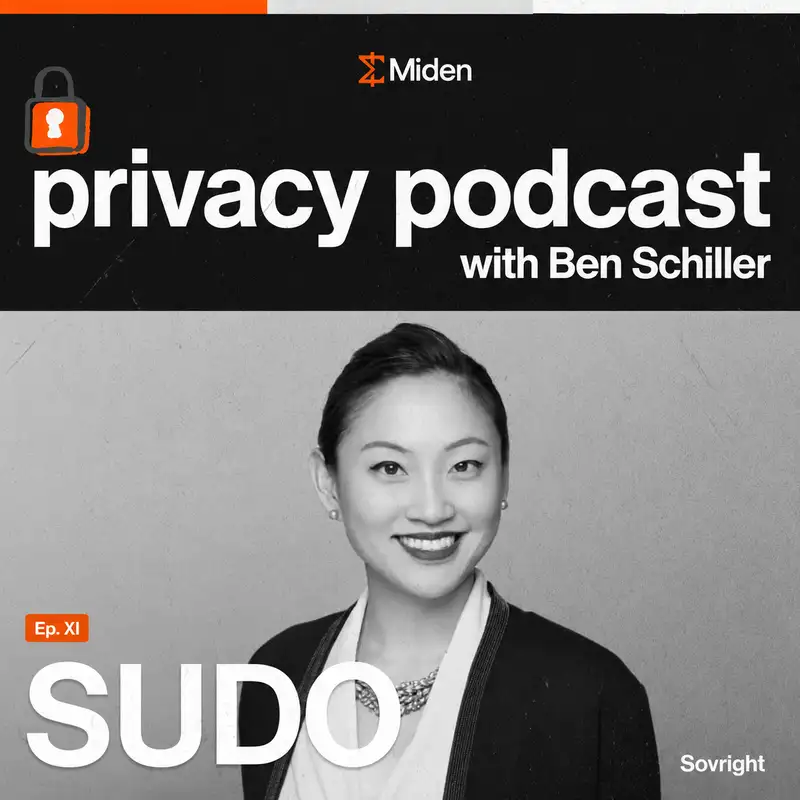
Sudo on Privacy Podcast
In this episode of the Privacy Podcast, Ben Schiller speaks with Sudo, Executive Director of Sovright, about AI, Zcash, and privacy as the right to choose. Sudo warns that we could could lose track of who has access to our data and how that information is being used as AI agents begin making more decisions and transactions on our behalf.
The conversation explores how privacy tools could help us set our own boundaries instead of accepting defaults designed for the convenience of platforms. It also covers Zcash network resilience and tools that could make privacy choices easier for everyday users.
Thanks for reading this edition of Privacy Dispatch. Please subscribe to receive this newsletter every Tuesday.
Till next time.