


There was a moment at the Bitcoin conference in Las Vegas last week that stayed with me. Not a panel, not an announcement — more of an atmosphere. As the ballrooms filled with suits and the agenda leaned into ETFs, custody solutions, and institutional on-ramps, something felt noticeably absent: the Edge.
Bitcoin has won, in a sense. It has its seat at the table, its spot in the 401(k), its congressional champions. But winning has a cost. The culture that built it — paranoid, principled, technically obsessive — is quietly dispersing.
You could see where it was going. Zcash, as it has done for the last year, was drawing real attention, not as a curiosity but as a serious technology from people who care about what Bitcoin used to stand for. The cypherpunk tradition, the belief that cryptography is a tool of liberation, that privacy is not a feature but a right, hasn't died. But it's finding new addresses.
This isn't nostalgia. It's a rational response to what Bitcoin has become. When your asset class has a BlackRock ticker and a Senate caucus, the compliance apparatus follows. Surveillance becomes structural. The original promise, peer-to-peer electronic cash, outside the reach of intermediaries, gets quietly archived.
Barry Silbert noticed it too. Silbert's credentials here matter: he was one of the earliest Wall Street figures to take Bitcoin seriously, going back to 2011 or 2012, long before it was respectable. He's not a maximalist evangelist — he's a capital allocator who reads the room better than most. Speaking at Bitcoin Investor Week in New York earlier this year, he was direct: "The bet we're making is 5%-10% of Bitcoin over the next few years, is going to find its way into privacy-focused cryptocurrencies." He named Zcash specifically, calling it a 500x opportunity of the kind Bitcoin can no longer offer.
Silbert's reasoning is worth sitting with. He acknowledged openly that the old narrative — that Bitcoin is anonymous cash — no longer holds in an era of blockchain forensics such as Chainalysis and Elliptic. The surveillance infrastructure built around Bitcoin is now mature, and he's skeptical the network will ever add meaningful privacy features. That capital has to go somewhere.
Part of what makes this structural rather than cyclical is that Bitcoin's privacy roadmap is effectively frozen. The network's conservative governance makes protocol-level changes glacially slow, and there is no credible path to native privacy features on the base layer.
Meanwhile the tools ranged against it have kept pace. Bitcoin addresses are public and linkable — pseudonymous rather than anonymous — and on-chain data combined with off-chain identifiers can expose users long after the fact. AI is accelerating that exposure. As blockchain data scales, so does the metadata available to machine learning models, and obfuscation-based privacy is degrading as a result. The pseudonymity Bitcoin once offered is becoming thinner by the month.
The gravitational pull isn't purely ideological. Zero-knowledge cryptography, the technology underpinning the most serious privacy-preserving systems (including Miden's), has matured dramatically. What was once a theoretical privacy guarantee is now a deployable, auditable, scalable one. The cypherpunks didn't just keep the faith; they kept building.
The cultural shift I observed in Las Vegas is real, and it's being driven by both disillusionment and technical progress in equal measure. Bitcoin's institutionalization created a vacuum. Privacy technology, with its renewed rigor and its uncompromised principles, is filling it.
Whether that migration happens at the pace Silbert envisions is an open question. But the direction feels right. The Edge didn't disappear. But it did move.
Privacy Roundup
Gateway FM released its Open Privacy Suite, a vendor-lock-free privacy infrastructure for any EVM chain — giving institutions granular control over on-chain visibility through ZK-proof authentication, role-based access, and selective disclosure via a single JSON-RPC proxy.
Toku, the global stablecoin payroll platform, partnered with Payy to launch confidential payroll settling directly to Payy-issued Visa cards via the Payy Network's ZK infrastructure.
GhostWareOS integrated with Zebec Cards to bring default privacy to everyday card spending on Solana, with USDC funding and card transactions protected by GhostWare's full privacy stack.
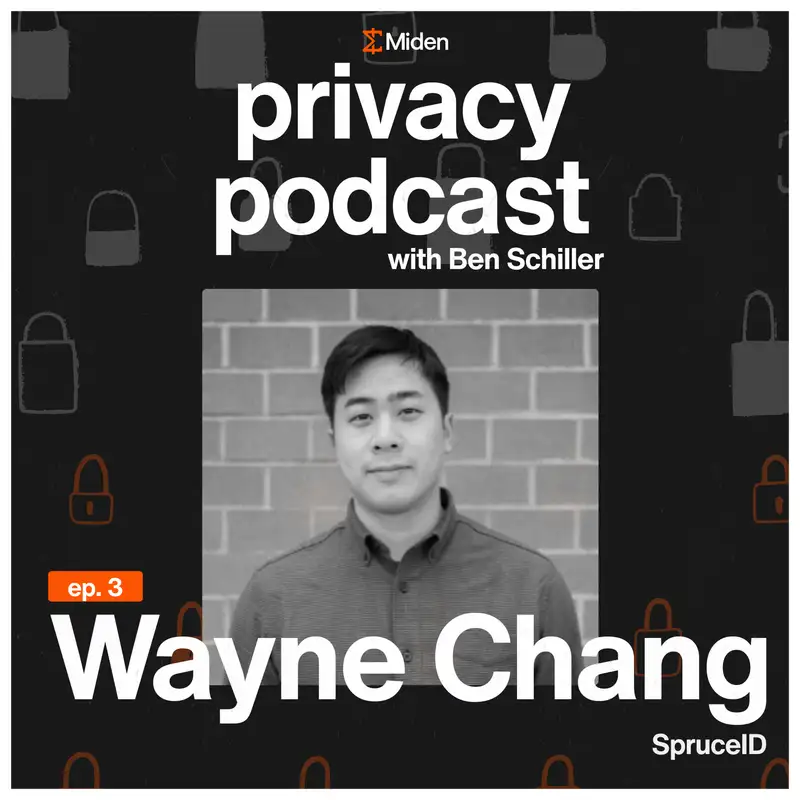
Wayne Chang on Privacy Podcast
The third episode of the Privacy Podcast features Wayne Chang, founder and CEO of Spruce ID, a company building tools that give users control over their identity and data online.
The conversation explores how little control most people actually have over their digital identity, and how Chang's company is working to change that.
Latest on Miden
Last week, we hosted a livestream with OpenZeppelin to walk through what Guardian is, how it works, and what it offers.
You can watch the full conversation here.

Thanks for reading this edition of Privacy Dispatch. Please subscribe to receive this newsletter every Monday alongside new episodes of the Privacy Podcast.
Till next time.